Corridor Overview

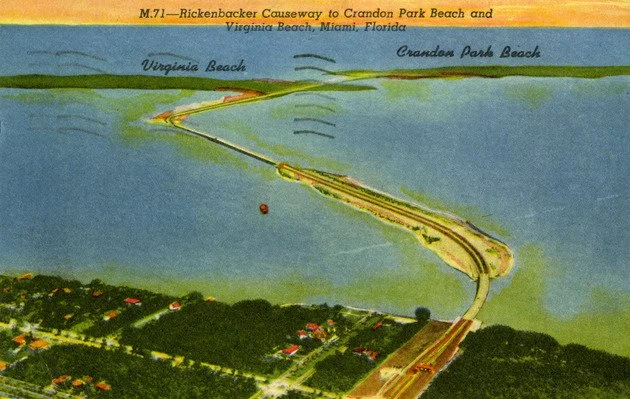
The Rickenbacker Corridor is a critical civic, ecological, and transportation spine connecting mainland Miami to Virginia Key and the Village of Key Biscayne. It serves commuters, residents, students, visitors, cyclists, boaters, and beachgoers while also supporting sensitive coastal habitats, public parks, and regionally significant cultural assets.

The corridor includes transportation infrastructure, public lands, waterfronts, and institutions that are governed by multiple agencies and shaped by long-standing legal, environmental, and operational constraints.

This website provides a shared, transparent resource to understand how the corridor works today, what has shaped it over time, and what considerations guide future decisions.
Together, these places form a single, interdependent system.

Understanding how each section functions—and how they connect—is essential for evaluating safety, resilience, access, and long-term possibilities for the Rickenbacker Corridor as a whole.

History & Context

1825
Cape Florida Lighthouse constructed
Built to guide ships navigating the Florida Reef; it is the oldest standing structure in Miami-Dade County.
1940
Crandon Park land donation ties access to infrastructure
The Matheson family donates 808+ acres for Crandon Park on the condition that a causeway be built.
1947
Rickenbacker Causeway opens
The causeway officially opens and connects Miami → Virginia Key → Key Biscayne, transforming access and land use along the corridor.
1955
Miami Seaquarium opens
A major regional attraction opens on Virginia Key, shaping tourism, public land stewardship debates, and corridor identity for decades.
1963
Miami Marine Stadium opens
The first U.S. stadium built specifically for powerboat racing opens on Virginia Key; it becomes a major civic and cultural landmark.
1985
William M. Powell Bridge replaces the original drawbridge
A higher bridge replaces the original drawbridge on the causeway; remaining old spans become fishing piers, shifting how people use the corridor.
1992
Hurricane Andrew impacts the area; Marine Stadium closes
Hurricane damage contributes to the stadium being deemed unsafe; it closes, highlighting climate vulnerability and the fragility of coastal infrastructure.
2018
Miami Marine Stadium added to the National Register
Preservation efforts culminate in national recognition, strengthening the case for restoration and long-term public reuse.
2025
Miami Seaquarium closes
After 70 years, the Seaquarium closes; the decision intensifies questions about public land stewardship, future uses, and corridor governance.